Reconcile every student fee payment, faster.
Collexo helps schools, colleges, universities, coaching institutes, and edtech businesses match student payments, track settlements, reduce suspense entries, and generate finance-ready reports.
Trusted by leading education institutions
 ·
·
 ·
·
 ·
·
 ·
·
 ·
·
 ·
·
 ·
·
 ·
·
 ·
·
 ·
·
 ·
·
 ·
·
 ·
·
 ·
·
 ·
·
From payment received to finance-ready reports.
Collexo connects settlement, visibility, reporting, and financial control in one reconciliation flow.
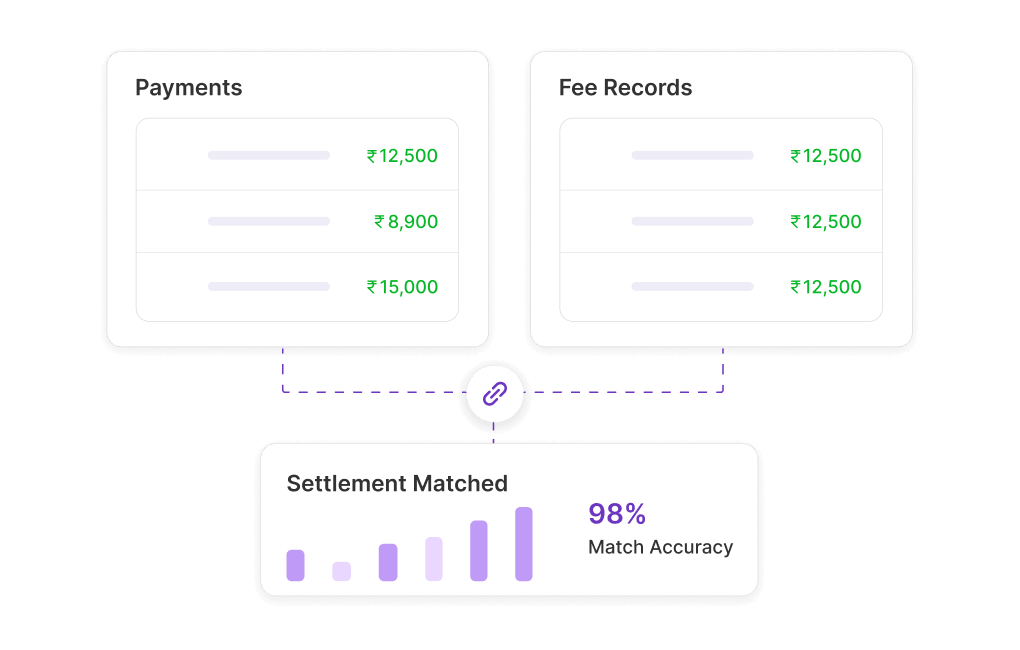
Match settlements
Automate matching of payments to fee records and settlement reports.
View collections
See collection status, pending dues and settlement movement in real time.
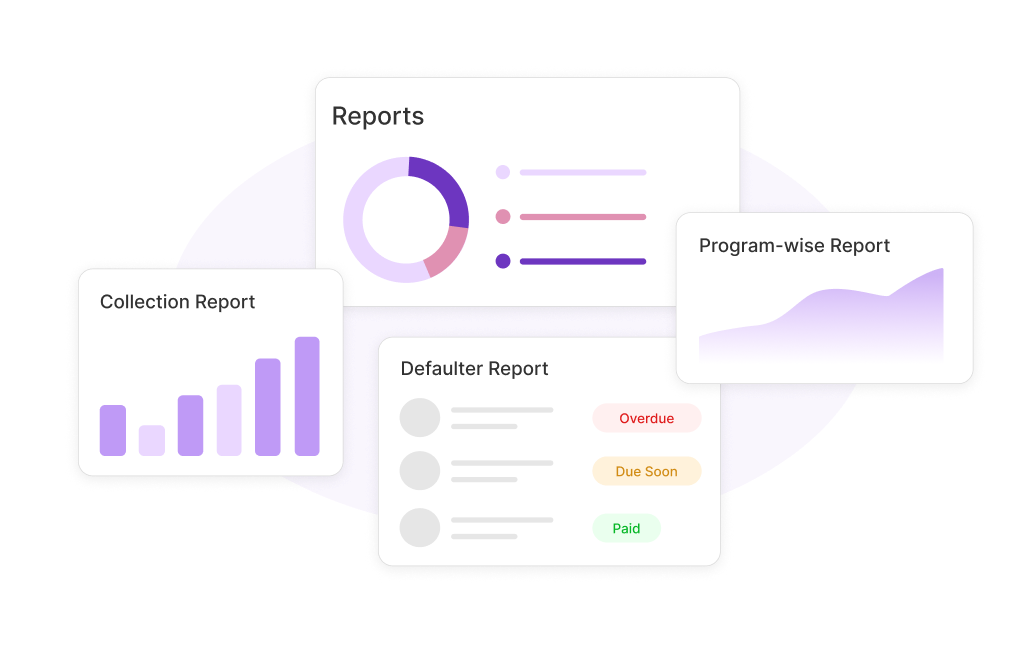
Generate reports
Create collection, defaulter, mode-wise, and program-wise reports.
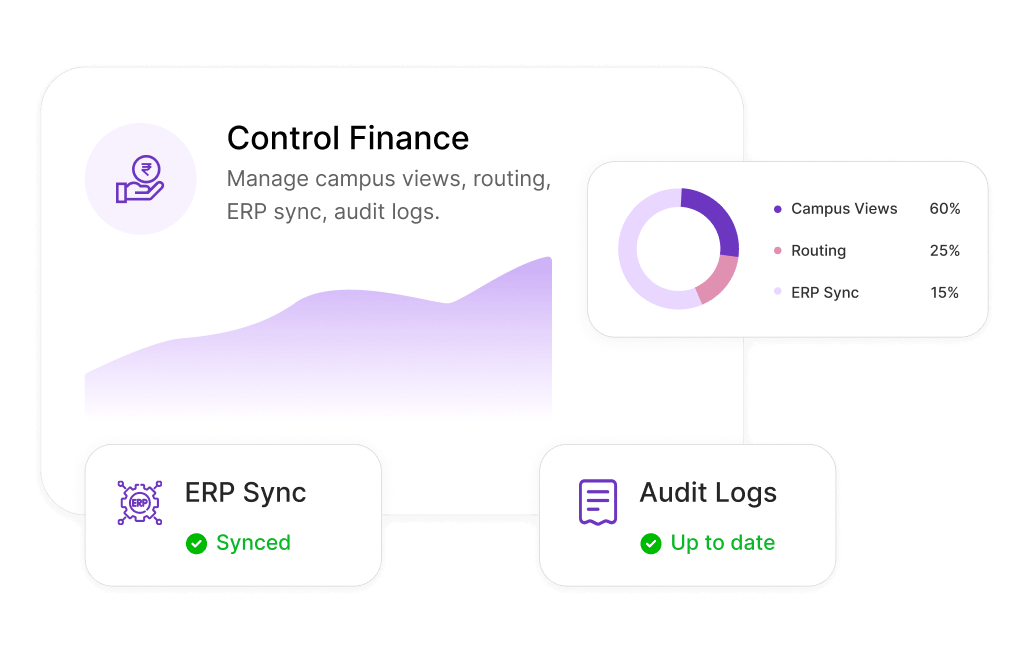
Control finance
Manage campus views, routing, ERP sync, audit logs.
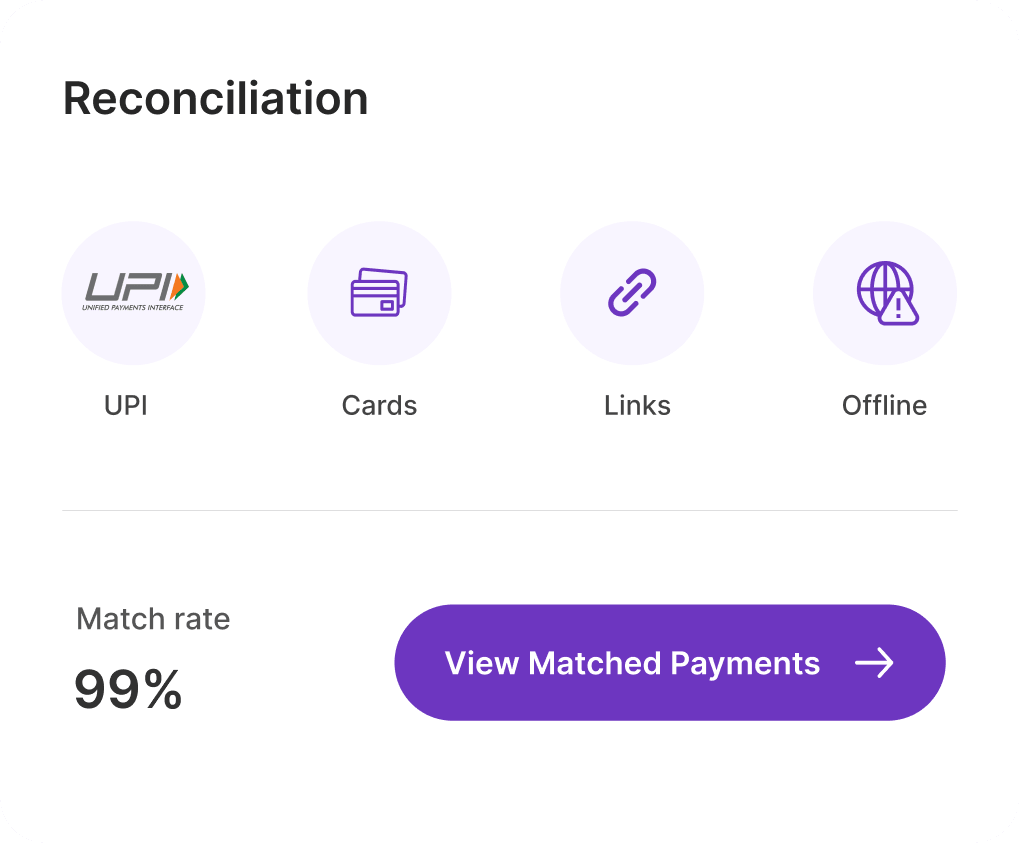
Match payments to the right ledger.
Automate student fee reconciliation across payment gateways, links, AutoDebit, QR, offline collection, and international payments.
- Match payments by student, fee head, and amount.
- Track settled, pending, and failed transactions.
- Reduce suspense entries and manual reference checks.
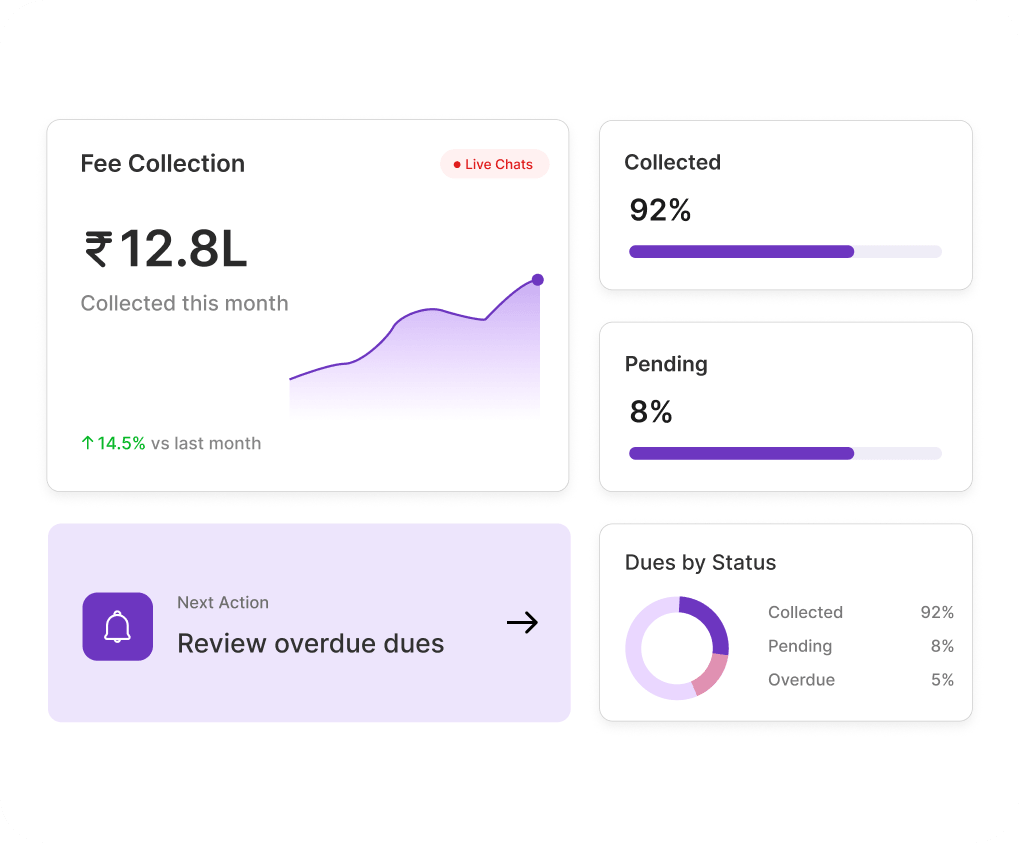
See fee collections in real time.
Give accounts, finance, and leadership teams a live dashboard for collected fees, pending dues, refunds, and settlement status.
- Real-time fee collection visibility.
- Mode-wise and fee-head-wise dashboards.
- Drill down to student, program, or campus level.
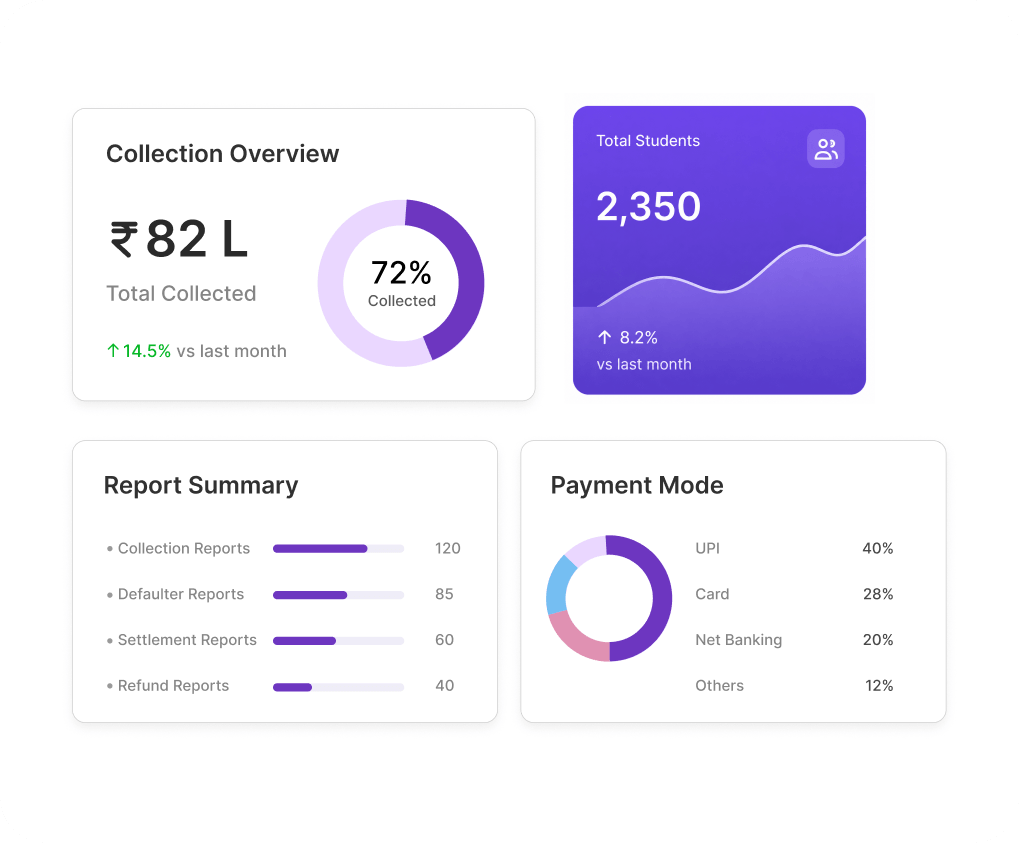
Generate reports finance can use.
Create fee collection reports, defaulter lists, settlement reports, refund reports, and payment mode reports without manual compilation.
- Collection, defaulter, and outstanding reports.
- Program-wise, campus-wise, and fee-head-wise reports.
- Excel and PDF exports for finance reviews.
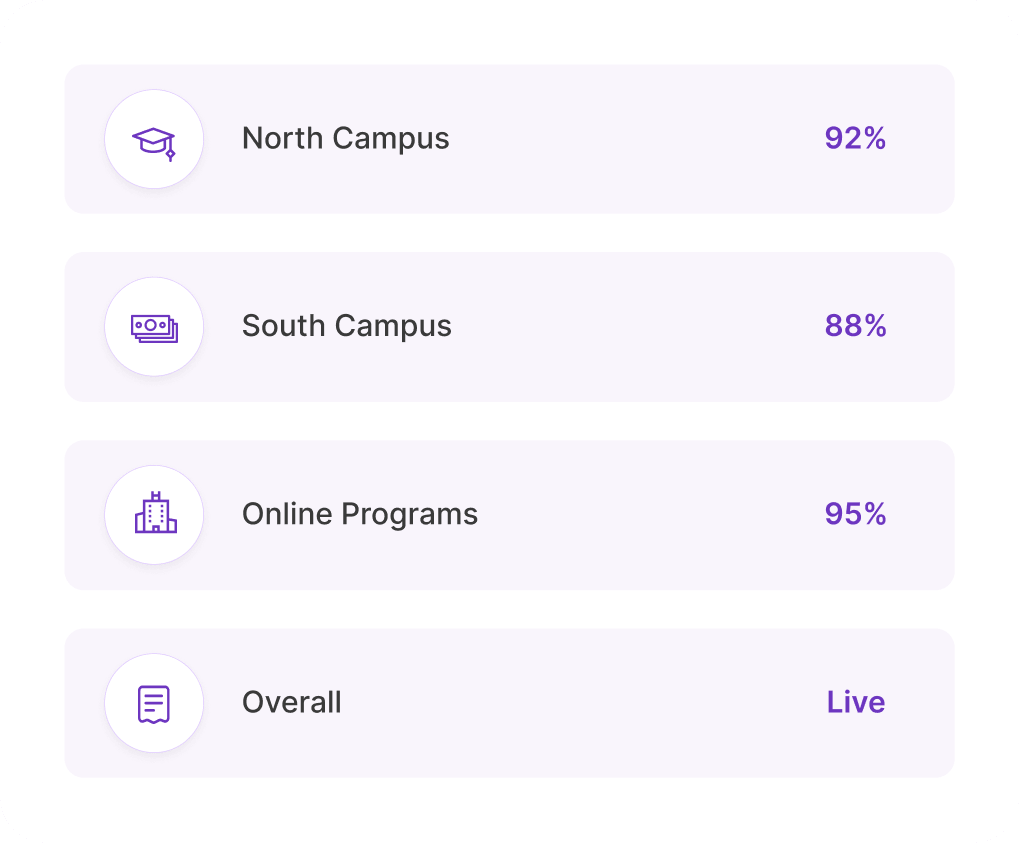
Compare collections across campuses.
Track fee reconciliation and collection performance across branches, campuses, departments, entities, and online programs.
- Campus-wise collection visibility.
- Entity-level settlement reports.
- Consolidated finance reporting.
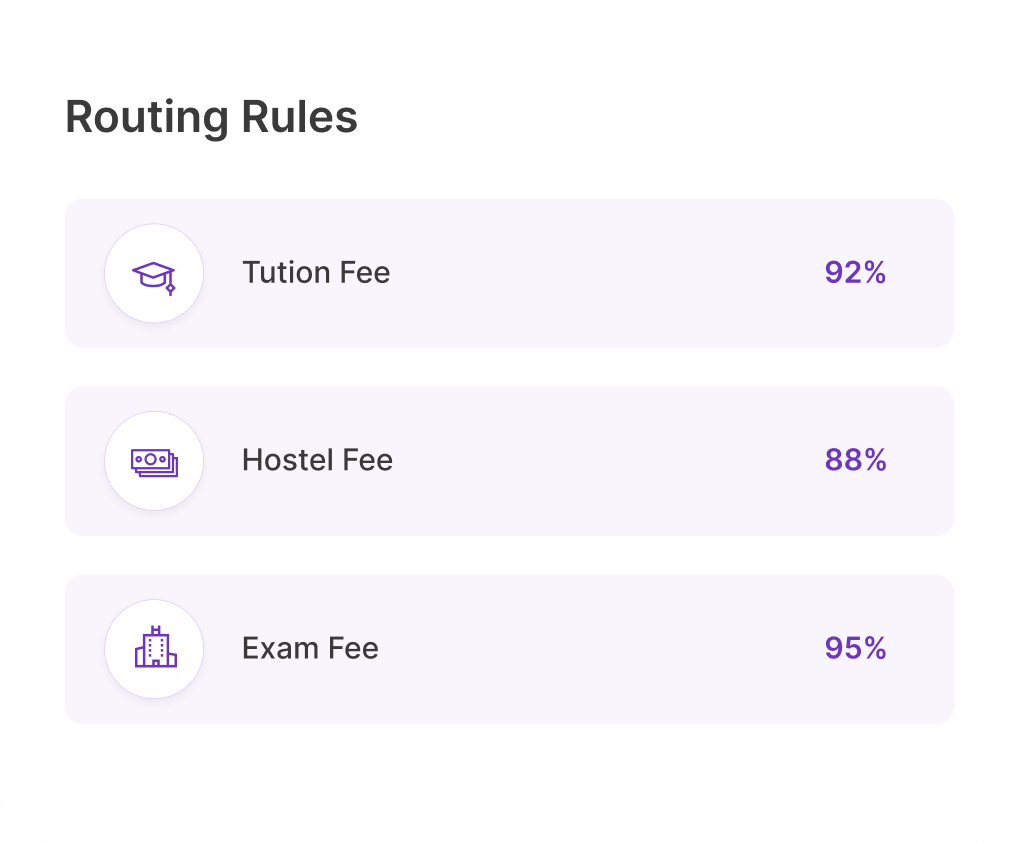
Route settlements to the right account.
Set routing rules by fee type, campus, program, department, or bank account to simplify bank reconciliation.
- Account mapping by fee head or entity.
- Split settlement support.
- Cleaner settlement and bank reports.
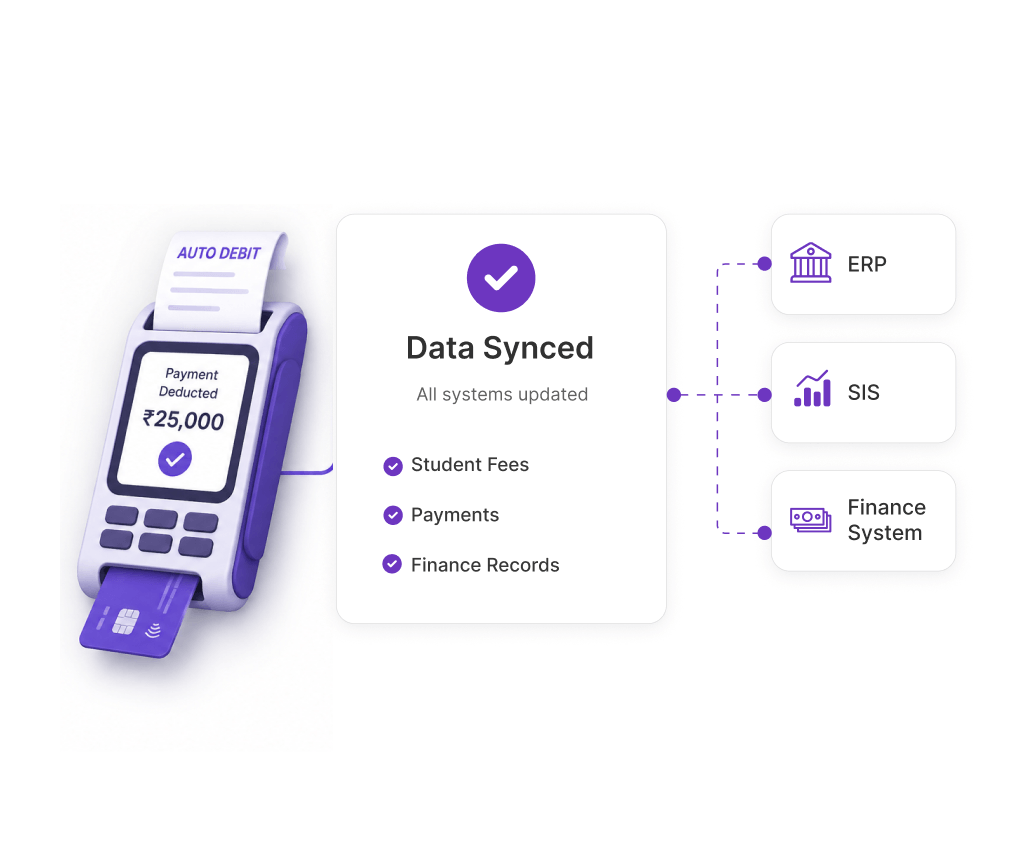
Sync fee data with existing systems.
Connect reconciliation data with ERP, SIS, accounting, and enrollment systems to reduce duplicate updates.
- Sync student fee and payment records.
- Connect with finance and campus systems.
- Reduce manual upload and download cycles.
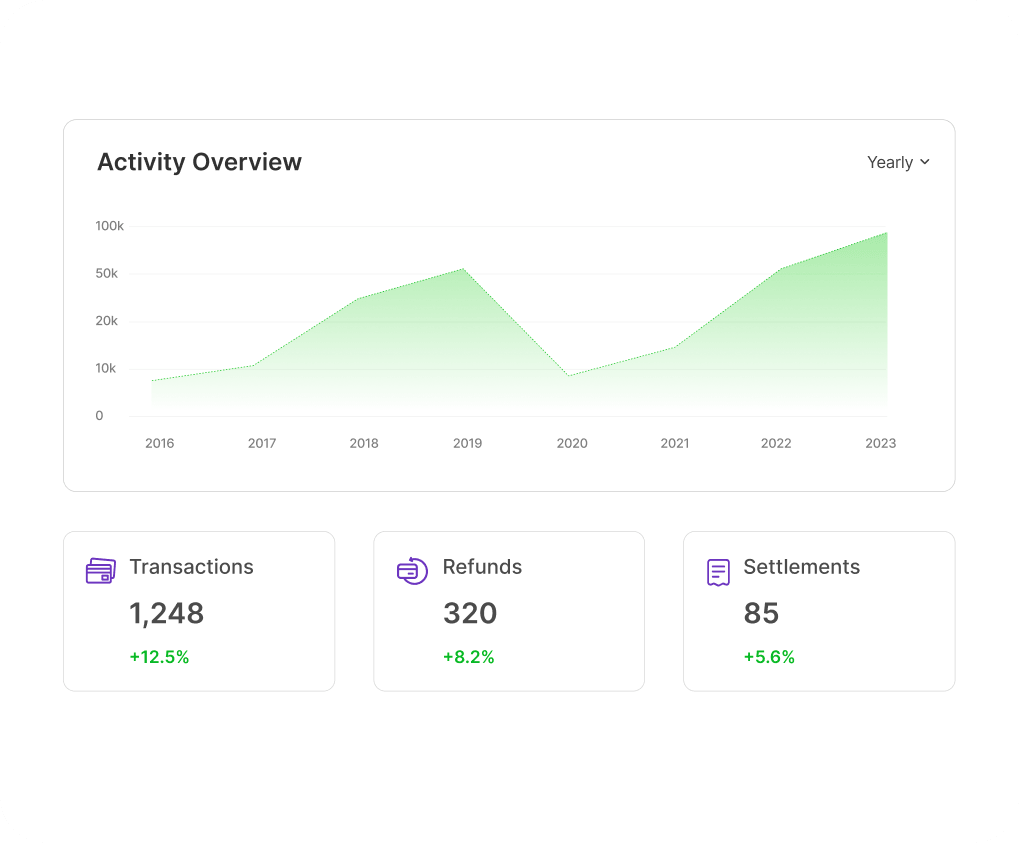
Keep every finance action traceable.
Maintain a clear audit trail of transactions, refunds, settlements, user actions, and configuration changes.
- Transaction-level activity history.
- User and timestamp logs.
- Audit-ready finance records.
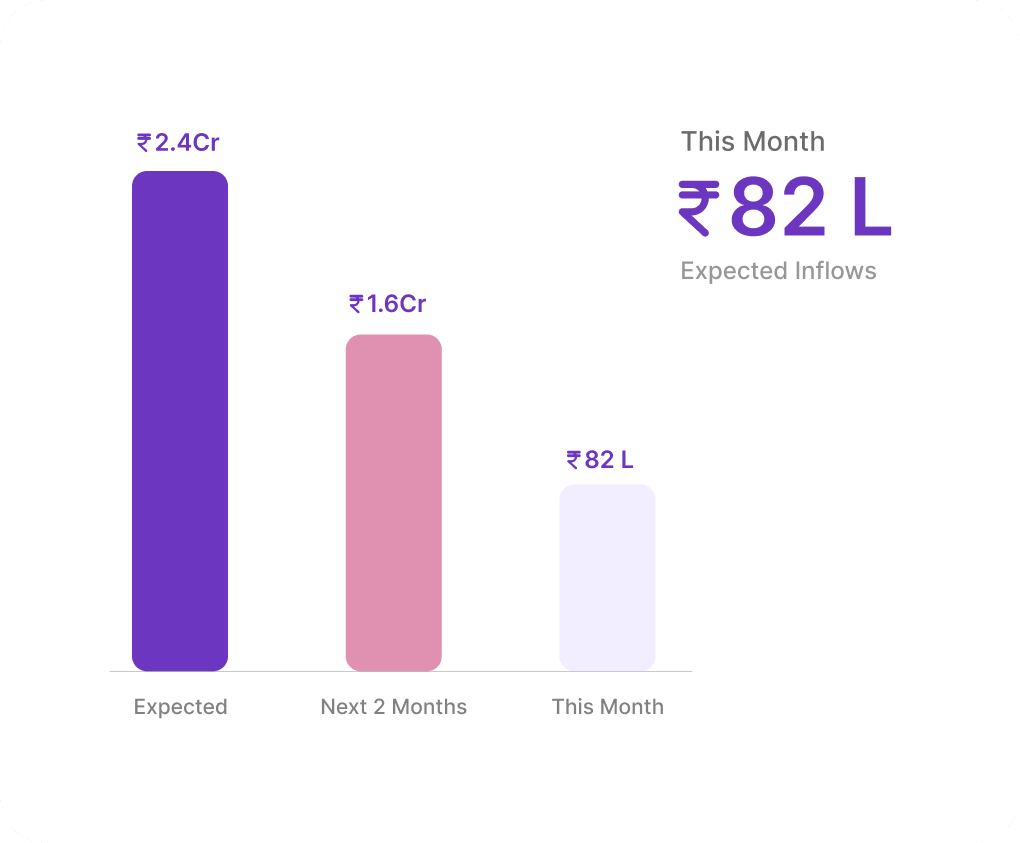
Plan upcoming fee collections.
Forecast expected fee inflows by month, program, campus, fee category, or due date.
- Upcoming collection visibility.
- Campus and program-wise forecasts.
- Better cash planning for finance teams.
Configure fees, collect across channels, and track settlements from one place.
Manage Fees
Set up fee structures, instalments, discounts, taxes, and reminders.
Explore fee management ->Collect Fees
Collect through online, offline, AutoDebit, EMI, links, and QR.
Explore collection ->Reconcile & Report
Track payments, settlements, dues, and reports in real time.
Explore reconciliation ->Frequently asked questions about fee reconciliation
Learn how Collexo reconciles student fee payments, tracks settlements, identifies exceptions, and gives education finance teams a unified view of collections across payment channels, campuses, and financial systems.
What is fee reconciliation in an educational institution?
Fee reconciliation is the process of matching every student fee payment with the corresponding fee demand, transaction record, receipt, settlement, and bank credit.
It confirms that the amount charged, the amount paid, the amount processed by the payment partner, and the amount settled into the institution’s bank account are consistent.
Accurate fee reconciliation helps schools, colleges, universities, coaching institutions, and other educational organisations identify mismatches, reduce revenue leakage, maintain correct student ledgers, and produce reliable financial reports.
How does Collexo automate fee reconciliation?
Collexo automates fee reconciliation by connecting student fee records with payment transactions, gateway responses, settlements, refunds, reversals, and bank-level collection data.
Every payment is matched against the relevant student, fee demand, fee head, instalment, academic session, campus, payment method, transaction reference, and settlement record.
Collexo classifies transactions by status, identifies unmatched or incomplete records, and presents exceptions to finance teams for resolution. This replaces manual matching across payment gateway dashboards, bank statements, ERP exports, and spreadsheets.
What records does Collexo match during fee reconciliation?
Collexo matches the complete set of records involved in an institutional fee transaction.
These include:
- Student and payer records
- Fee structures and fee demands
- Instalments and payment schedules
- Online and offline payment records
- Receipts issued against payments
- Payment gateway transaction responses
- Bank and settlement references
- Gateway charges and applicable deductions
- Refunds and transaction reversals
- Duplicate or excess payments
- Outstanding student balances
This creates a traceable connection between what the institution charged, what the payer paid, what the payment partner processed, and what the institution ultimately received.
Does Collexo reconcile payments collected through multiple payment methods?
Yes. Collexo reconciles fee payments collected through multiple digital and offline payment methods.
These include UPI, credit cards, debit cards, net banking, dynamic QR codes, bank transfers, EMI, payment links, recurring payment mandates, cash, cheque, demand draft, NEFT, RTGS, and other institution-configured modes.
Collexo brings these payment records into one reconciliation workflow and connects each transaction with the correct student, fee demand, fee head, and settlement record.
How does Collexo track payment settlements?
Collexo tracks each transaction from payment initiation through processing, settlement, and final reconciliation.
Finance teams view the transaction amount, payment method, payment partner, transaction date, settlement date, settlement reference, applicable deductions, net settled amount, and bank account receiving the funds.
Collexo also identifies transactions that remain unsettled, settle partially, settle late, or differ from the expected amount, giving finance teams clear visibility into settlement status and exceptions.
How does Collexo identify reconciliation discrepancies?
Collexo compares fee records, transaction responses, settlement files, refunds, reversals, and bank-related data to identify reconciliation discrepancies.
It flags exceptions such as:
- Successful payments without matching fee records
- Fee records without corresponding payments
- Failed or pending transactions
- Unsettled or partially settled transactions
- Settlement amount mismatches
- Duplicate payments
- Unidentified bank transfers
- Refunds not reflected in the student ledger
- Reversals or chargebacks requiring action
- Incorrect student or fee demand mapping
Each exception remains visible until it is investigated and resolved, creating an auditable reconciliation process.
How does Collexo manage failed, pending, and reversed payments?
Collexo tracks failed, pending, reversed, refunded, and disputed transactions as distinct payment states.
A failed or pending payment does not incorrectly close the student’s fee demand or outstanding balance. A reversal or refund is linked back to the original transaction, fee demand, fee head, and student ledger.
This ensures that the student’s financial record reflects the actual outcome of the transaction rather than the initial payment attempt.
Does Collexo reconcile offline fee payments?
Yes. Collexo reconciles offline fee payments alongside online transactions.
Offline modes include cash, cheque, demand draft, NEFT, RTGS, bank transfer, direct bank deposit, and point-of-sale collections.
Authorised users record the payment against the relevant student, fee demand, fee head, academic period, and payment reference. The transaction then moves through the institution’s configured verification, approval, and reconciliation workflow.
What fee reconciliation reports are available in Collexo?
Collexo provides finance and reconciliation reports across the complete fee collection lifecycle.
These include:
- Collection reports
- Transaction-level reconciliation reports
- Settlement reports
- Payment method reports
- Gateway-wise collection reports
- Bank account-wise settlement reports
- Failed and pending transaction reports
- Unmatched transaction reports
- Refund and reversal reports
- Outstanding dues reports
- Student ledger reports
- Campus, programme, and entity-level reports
Reports remain connected to the underlying student, fee demand, transaction, settlement, and payment status rather than existing as isolated transaction summaries. Finance teams filter reports by date, campus, legal entity, programme, fee head, payment method, gateway, settlement status, and transaction status, and export them for internal reviews, audit preparation, accounting workflows, compliance reporting, and management reporting.
Does Collexo provide real-time visibility into collections and settlements?
Yes. Collexo provides continuously updated visibility into fee collections, transaction status, settlements, outstanding dues, refunds, reversals, and reconciliation exceptions.
Finance teams view collections by campus, programme, fee head, payment method, payment partner, bank account, academic session, and date range.
This reduces dependency on manually consolidated reports and gives institutional teams a current view of fee operations and financial exceptions.
Does Collexo support reconciliation across multiple campuses and legal entities?
Collexo reconciles fee collections across multiple campuses, branches, schools, colleges, departments, and legal entities.
Each campus or entity operates with its own fee structures, fee demands, receipts, payment journeys, bank accounts, settlement rules, user permissions, and reports.
Central finance teams receive consolidated visibility across the group while retaining campus-wise, entity-wise, bank-wise, and transaction-level detail.
Does Collexo integrate reconciliation data with ERP, SIS, and accounting systems?
Collexo integrates reconciliation data with ERP platforms, Student Information Systems, CRM platforms, admission systems, finance applications, and accounting software. Collexo is also natively connected to Meritto®, NoPaperForms’ Operating System for Student Enrollments, so the enrollment record and the financial record stay align ed.
Integrations exchange fee demands, payment status, receipts, settlements, refunds, reversals, student balances, and accounting entries through APIs, webhooks, secure file exchange, scheduled synchronisation, and other supported methods.
This keeps institutional systems aligned while Collexo operates as the financial system of record for fee collections and payments.
How is Collexo different from a payment gateway reconciliation dashboard?
A payment gateway reconciliation dashboard shows transactions and settlements processed through that gateway. Collexo reconciles the complete institutional financial workflow around those transactions.
Collexo integrates with licensed payment partners and payment gateways and connects each payment with the student, fee demand, fee head, instalment, academic session, campus, receipt, settlement, refund, reversal, and outstanding balance.
It also consolidates payments across multiple gateways, payment methods, offline channels, bank accounts, campuses, and institutional systems. This makes Collexo the financial system of record for fee collections rather than another isolated payment dashboard.
Why do educational institutions use Collexo for fee reconciliation?
Educational institutions use Collexo because it connects fee management, collections, settlements, reconciliation, student ledgers, and financial reporting through one unified system.
Collexo gives finance teams transaction-level traceability, automated matching, settlement visibility, exception management, multi-campus reporting, and integration with institutional systems. This reduces manual errors, accelerates settlement verification, improves student ledger accuracy, shortens month-end closure, and strengthens audit readiness.
As NoPaperForms’ Operating System for Fee Collections and Payments, Collexo creates a reliable financial system of record for the complete institutional fee lifecycle.
Automate fee reconciliation with Collexo.
See how your finance team can match student payments, track settlements, reduce suspense entries, and generate reports from one connected system.