Collect every fee, through every payment channel.
Give students and parents the flexibility to pay application, admission, tuition and other institutional fees through checkout, payment links, recurring mandates, QR codes, EMI, offline modes and international payment channels.
Built for universities, colleges, schools, coaching institutes and EdTech companies.
 ·
·
 ·
·
 ·
·
 ·
·
 ·
·
 ·
·
 ·
·
 ·
·
 ·
·
 ·
·
 ·
·
 ·
·
 ·
·
 ·
·
 ·
·
Collect fees.
Collexo handles the rest.
One flow for checkout, links, AutoDebit, EMI, QR, offline, and international payments.
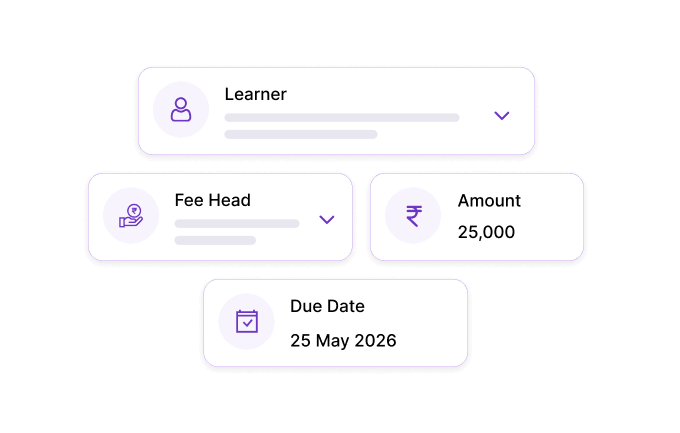
Create fee demand
Select the learner, fee head, amount, and due date.
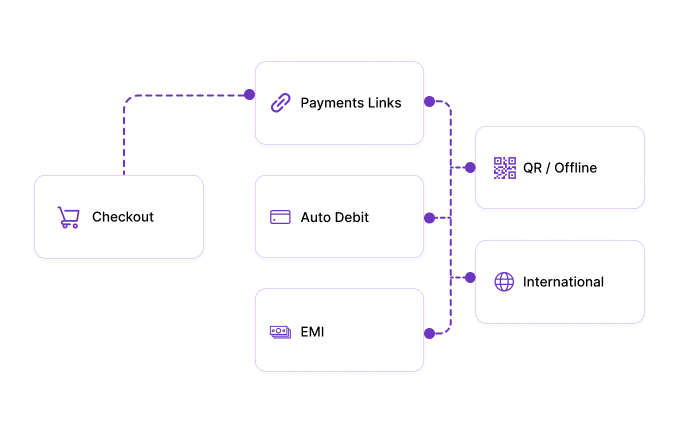
Choose payment route
Use checkout, links, AutoDebit, EMI, QR, offline, or international.
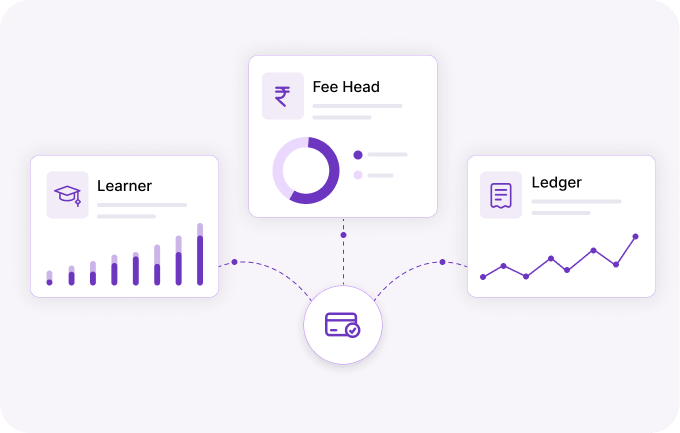
Collect and map
Every payment connects to the right learner, fee head, and ledger.
Review and reconcile
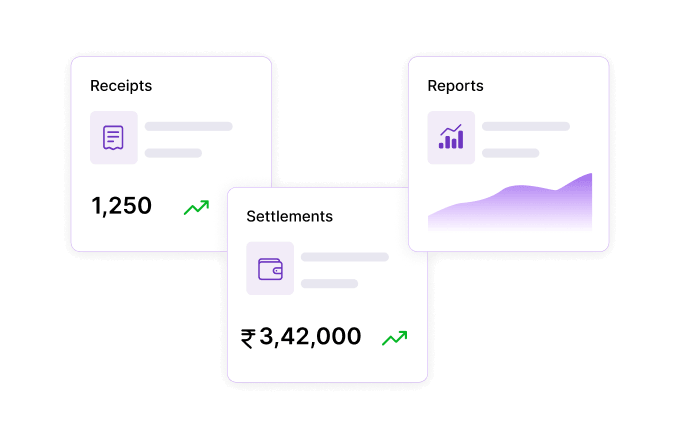
Receipts, settlements, and reports update automatically.
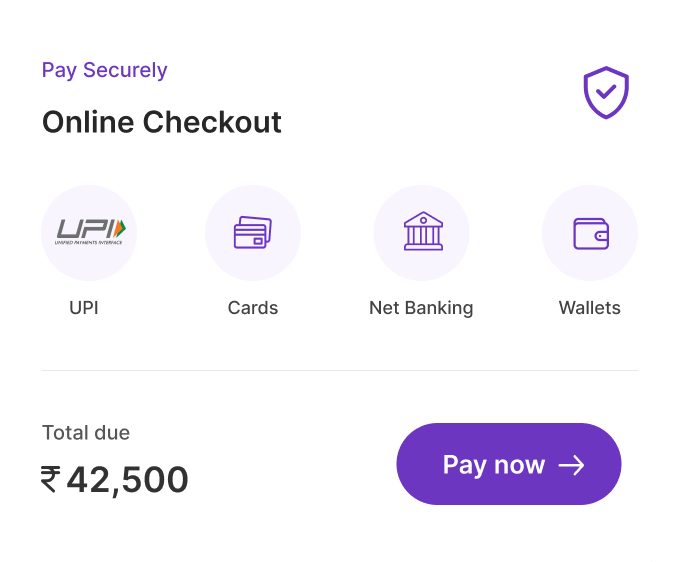
A fee checkout built for every student journey.
Accept application, admission, tuition and ancillary fees through a mobile-responsive checkout connected to the student and the applicable fee structure.
- UPI, cards, net banking, and bank transfers.
- Custom payment pages, live quickly.
- Partial payments and fee-head splitting.
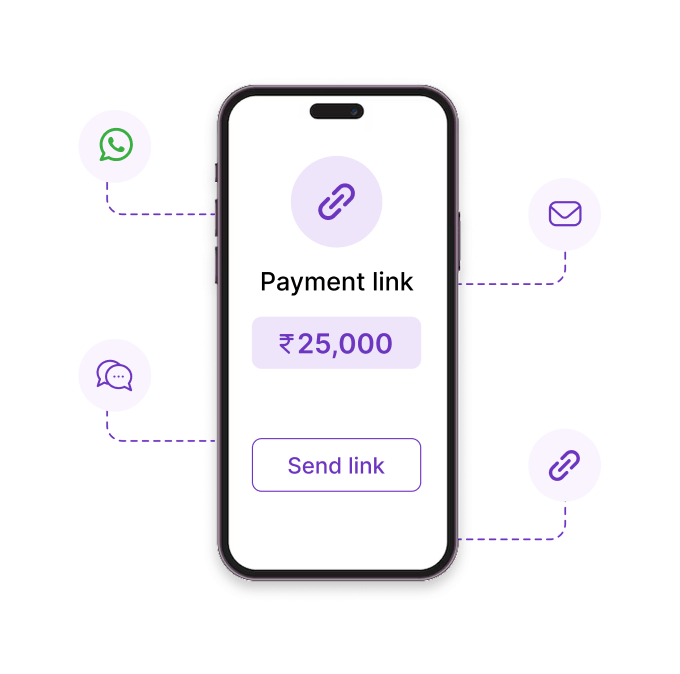
Send secure fee-payment links over WhatsApp, SMS, and email.
Share personalised links when a direct payment route is needed.
- Share on WhatsApp, SMS, email, or web.
- Links mapped to student and fee head.
- No bank-detail sharing or screenshot chasing.
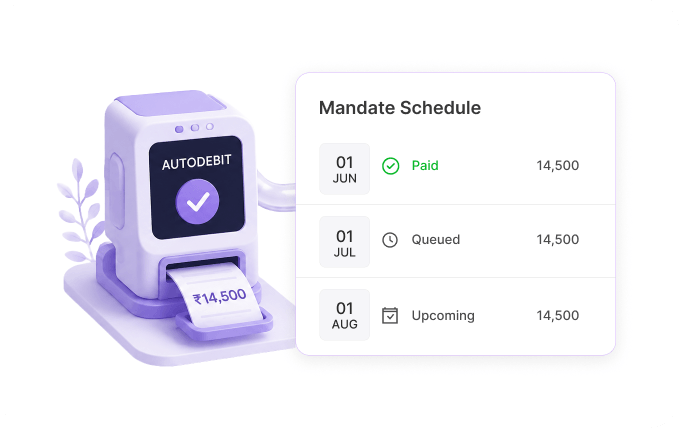
Automate recurring tuition and instalment collections.
Set mandates once and collect recurring fees on schedule.
- eNACH debit on scheduled due dates.
- Parent alerts before debit through WhatsApp and SMS.
- Real-time success and failure updates.
Collect counter payments through transaction-specific dynamic QR codes.
Generate an amount-locked QR mapped to the learner, fee head, and amount.
- Built for admission and finance counters.
- Works with any UPI app parents already use.
- Auto-mapped from scan to settlement.
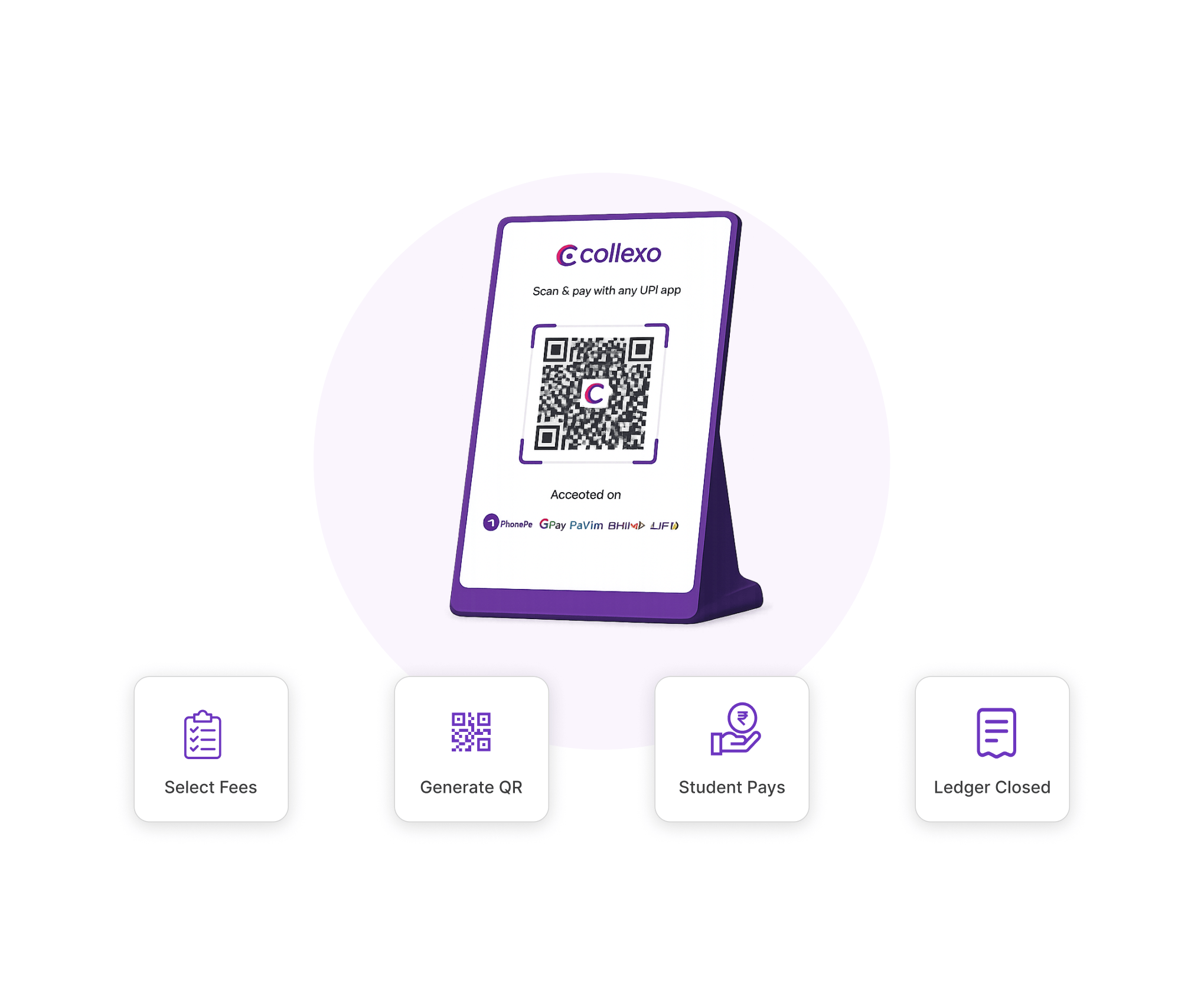
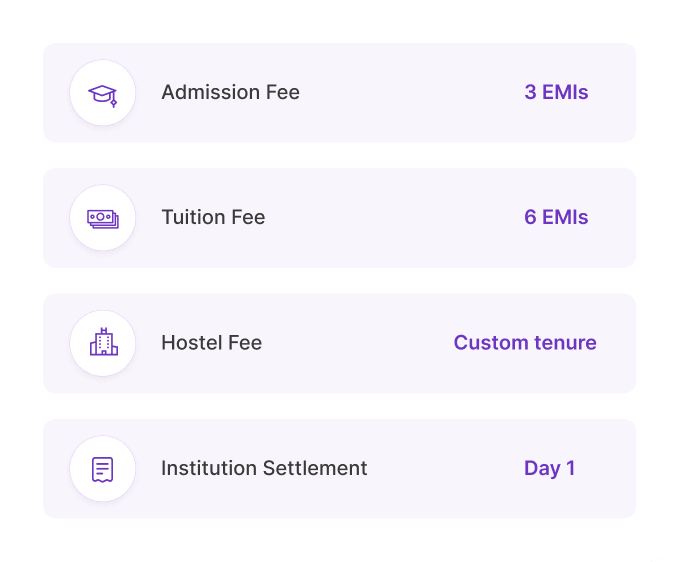
Offer students flexible EMI while the institution receives payment upfront.
Let families pay in instalments while the institution receives fees upfront.
- Institution receives fees upfront.
- Multiple partners and tenures.
- Parents select EMI at checkout in a seamless flow.
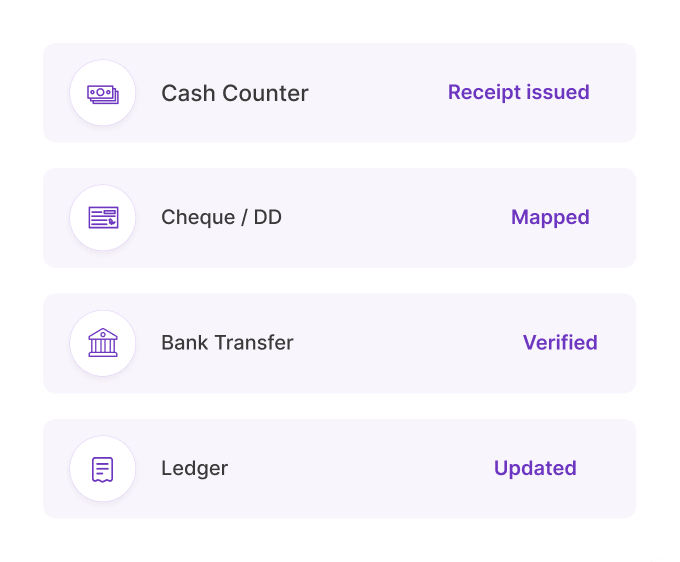
Bring offline collections into the same system.
Record cash, cheque, demand draft, bank transfer and other offline collections against the student and fee demand, alongside digital transactions.
- Record offline payments against the learner record.
- Generate receipts instantly.
- Keep one source of truth.
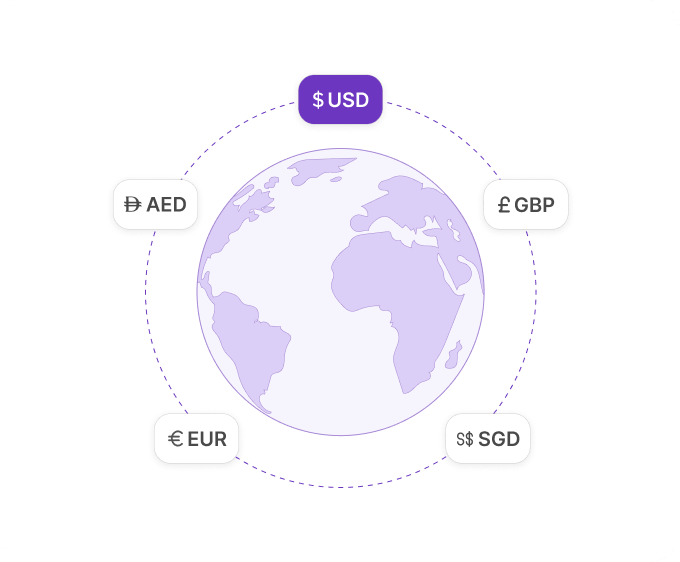
Collect fees across borders.
Accept education fee payments from international students, parents and sponsors through supported currencies and payment methods.
- Support multi-currency collections.
- Reduce manual transfer tracking.
- Keep payment status visible to teams.
Collect, manage, and reconcile in one connected flow.
Configure fees, collect across channels, and track settlements from one place.
Manage Fees
Set up fee structures, instalments, discounts, taxes, and reminders.
Explore fee management ->Collect Fees
Collect through online, offline, AutoDebit, EMI, links, and QR.
You are hereReconcile & Report
Track payments, settlements, dues, and reports in real time.
Explore reconciliation ->Frequently asked questions about education fee collection
Learn how Collexo helps educational organisations collect fees across payment channels, manage student payment journeys, track transactions, and connect every collection with reconciliation and financial records.
What is Collexo Payment Cloud?
Unlike a standalone payment gateway, Collexo operates as the financial system of record for institutional fee operations. It connects every payment with the relevant student, fee demand, fee head, due date, academic session, and settlement record.
Collexo is built on top of licensed payment infrastructure, enabling secure and compliant transactions while giving institutions complete operational visibility across the fee lifecycle.
How do educational institutions collect fees through Collexo?
Collexo generates payment links, fee demands, QR codes, and collection workflows for individual students, programmes, campuses, batches, or fee categories. Institutions distribute these payment requests through WhatsApp, SMS, email, student portals, mobile applications, and institutional websites.
Every completed payment is automatically connected with the relevant student, fee demand, fee head, academic period, and transaction record, removing manual payment identification and spreadsheet-based tracking.
Which online payment methods does Collexo support?
Institutions accept fee payments through UPI, credit cards, debit cards, net banking, mobile wallets, bank transfers, dynamic QR codes, EMI options, recurring payment mandates, and international payment methods where configured.
Collexo brings every payment mode into one operational layer, so finance teams track transactions, settlements, refunds, and reconciliation without managing disconnected payment dashboards.
Does Collexo send payment links through WhatsApp, SMS, and email?
Each payment link is connected to a specific student, fee demand, fee category, and amount. Once the payment is completed, Collexo updates the relevant payment record and student ledger automatically.
Does Collexo support recurring tuition payments?
Institutions configure monthly, quarterly, semester-wise, term-wise, annual, and custom payment schedules. Every instalment carries its own amount, due date, payment status, reminder workflow, and outstanding balance.
Recurring collections operate through Collexo AutoDebit and other supported payment mandates or scheduled payment requests, depending on the institution’s configured payment infrastructure.
Can students and parents pay education fees through EMI?
Eligible students and parents convert applicable fee amounts into instalments instead of paying the entire amount upfront. The available tenure, interest rate, approval process, and financing terms are determined by the relevant financial partner.
Collexo connects the financed transaction with the correct student, fee demand, and fee account, giving institutions complete visibility across financed and directly paid collections.
How do dynamic QR codes work for education fee collection?
The QR code is connected to the student account, fee demand, fee amount, fee category, academic session, campus, programme, and payment reference.
When the student or parent scans the QR code and completes the payment, Collexo maps the transaction to the correct fee demand and student record. This reduces the unidentified transfers, incorrect amounts, and manual reconciliation effort commonly associated with static QR codes.
Does Collexo record offline fee payments?
Institutions record payments received through cash, cheque, demand draft, NEFT, RTGS, direct bank transfer, bank deposit, and point-of-sale collections.
Authorised users connect each offline payment with the relevant student, fee demand, fee head, receipt, academic period, and payment reference. The payment then moves through the configured verification, approval, and reconciliation workflow.
Does Collexo support international education fee payments?
International students and parents pay through supported international cards, bank transfers, cross-border payment methods, and integrated payment partners.
Collexo connects every international payment with the relevant student, fee demand, fee record, currency, payment reference, and settlement, reducing dependence on email trails, spreadsheets, and manual bank-statement matching.
How does Collexo connect fee collection with reconciliation?
It tracks whether a transaction is initiated, successful, failed, pending, settled, partially settled, refunded, reversed, disputed, or unmatched.
This creates a traceable flow between the amount charged, the amount paid, the amount processed by the payment partner, and the amount settled into the institution’s bank account. Finance teams therefore manage collection and reconciliation as one connected workflow.
How is Collexo different from a payment gateway?
A payment gateway processes the movement of money between the payer, payment network, and institution. Collexo integrates with licensed payment partners and payment gateways and provides the software and technology layer that manages the education-specific workflow around each payment, connecting payment processing with fee structures, student records, fee demands, instalments, reminders, receipts, settlements, reconciliation, refunds, and reporting.
A payment gateway confirms whether a transaction succeeded. Collexo identifies who paid, what they paid for, which fee demand was cleared, whether the amount was fully settled, and how the payment affects the student’s outstanding balance.
Does Collexo integrate with ERP, SIS, CRM, and accounting systems?
Integrations exchange student records, fee structures, fee demands, payment requests, payment status, receipts, outstanding balances, refunds, settlements, reconciliation data, and accounting entries.
Collexo operates as the financial system of record for fee collections and payments while keeping the institution’s wider technology stack synchronised.
How secure are education fee payments processed through Collexo?
Its controls include secure data transmission, role-based access, user authentication, controlled permissions, audit trails, maker-checker workflows, transaction-level tracking, access logging, reconciliation controls, and exception monitoring.
NoPaperForms holds ISO 9001:2015 and ISO/IEC 27001:2022 certifications and SOC 2 Type I and Type II certifications, and is GDPR compliant following an independent audit of its GDPR control framework. The company also operates in accordance with applicable Indian data-protection requirements, including the Digital Personal Data Protection Act, 2023.
Every payment remains traceable from the original fee demand through payment processing, settlement, reconciliation, refund, reversal, and reporting.
Bring fee collection, management and reconciliation into one connected flow
See a demo of Collexo built around your fee structure and payment journeys.